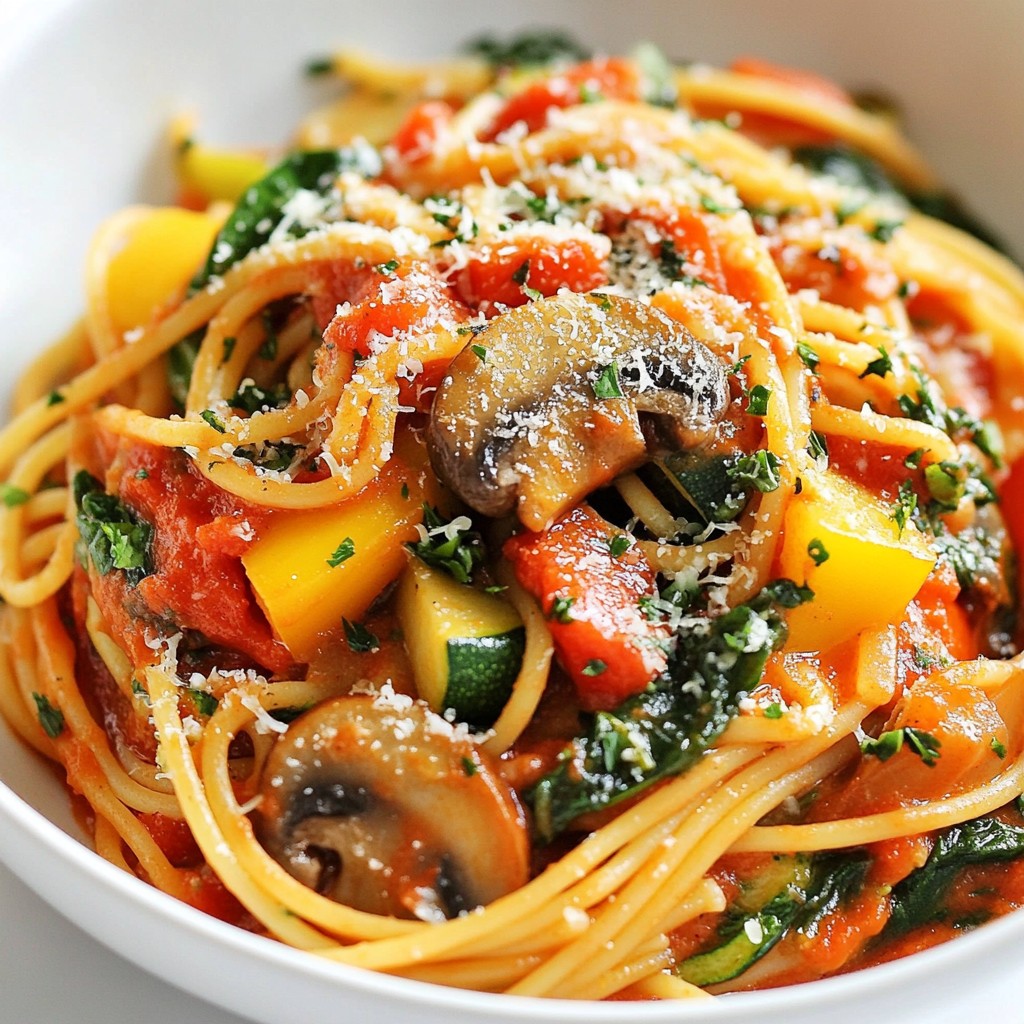
Looking for a quick, healthy dinner? My Veggie-Loaded Marinara Pasta is the perfect choice! Bursting with flavor and packed with nutrient-rich vegetables, this dish is simple to make. Whether you're a busy parent or a pasta lover, you’ll enjoy every bite. Join me as we explore easy steps, helpful tips, and tasty variations to make this meal fit your lifestyle. Let’s dive into this delicious recipe together!
Why I Love This Recipe
- Healthy and Nutritious: This dish is packed with a variety of vegetables, making it a wholesome meal that’s rich in nutrients.
- Easy to Prepare: With simple ingredients and straightforward instructions, this pasta is quick to whip up for any weeknight dinner.
- Customizable: You can easily modify the vegetables based on what you have on hand or your personal preferences.
- Delicious Flavor: The combination of herbs and fresh ingredients creates a flavorful marinara sauce that elevates the pasta experience.
Ingredients
List of Ingredients
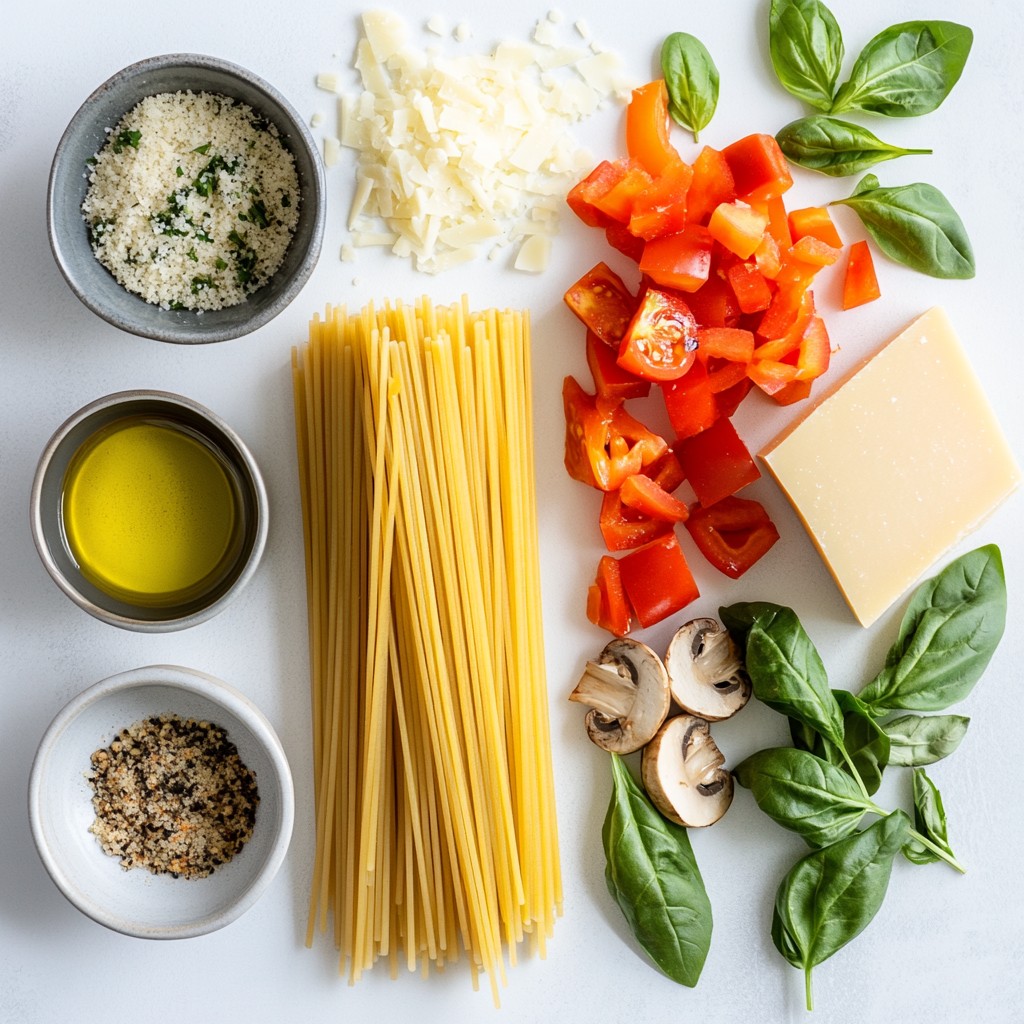
To make Veggie-Loaded Marinara Pasta, you'll need the following ingredients:
- 12 oz spaghetti or your choice of pasta
- 2 tablespoons olive oil
- 1 small onion, finely chopped
- 3 cloves garlic, minced
- 1 bell pepper (red or yellow), diced
- 1 medium zucchini, diced
- 1 cup mushrooms, sliced
- 1 carrot, grated
- 1 can (28 oz) crushed tomatoes
- 1 teaspoon dried oregano
- 1 teaspoon dried basil
- Salt and pepper to taste
- 1 cup fresh spinach
- Grated Parmesan cheese (optional, for serving)
Optional Ingredients for Variation
You can customize your dish with these optional ingredients:
- Red pepper flakes for some heat
- Fresh herbs like parsley or basil for extra flavor
- Olives or capers for a briny taste
- Different pasta shapes like penne or fusilli for fun textures
Nutritional Information
This dish is not just tasty; it is also healthy. Here’s a rough breakdown of the nutrition per serving:
- Calories: 320
- Protein: 10g
- Carbohydrates: 50g
- Dietary Fiber: 6g
- Fat: 10g
This Veggie-Loaded Marinara Pasta is a great way to enjoy a meal full of veggies. You can feel good about what you eat while also enjoying great flavors.
Step-by-Step Instructions
Cooking the Pasta
First, grab a large pot. Fill it with water and add some salt. Bring the water to a boil. Once it boils, add 12 ounces of spaghetti. Cook it as per the package directions until it is al dente. This means it should still have a bit of bite to it. After cooking, drain the pasta but keep a little of the pasta water aside. This water can help later if you need to loosen the sauce.
Sautéing the Vegetables
Now, take a large skillet and put it on medium heat. Pour in 2 tablespoons of olive oil. Once the oil is hot, add a finely chopped small onion. Sauté it for about 2 to 3 minutes, until it turns translucent. Next, toss in 3 minced garlic cloves and cook for about 30 seconds. Add a diced bell pepper, a medium diced zucchini, 1 cup of sliced mushrooms, and 1 grated carrot into the skillet. Sauté these veggies for around 5 to 7 minutes, or until they become tender and colorful.
Combining Sauce and Pasta
Once the veggies are ready, it’s time for the sauce. Pour in a 28-ounce can of crushed tomatoes. Add 1 teaspoon of dried oregano and 1 teaspoon of dried basil. Season with salt and pepper to taste. Bring this mix to a gentle simmer. Let it cook for about 10 minutes. Stir it occasionally so nothing sticks. After the sauce thickens, stir in 1 cup of fresh spinach and let it wilt. Next, add the cooked pasta to the skillet. Toss everything together. If it looks dry, add a splash of the reserved pasta water. Now, your Veggie-Loaded Marinara Pasta is ready to serve!
Tips & Tricks
How to Perfect the Marinara Sauce
To make the best marinara sauce, start with quality crushed tomatoes. I love using San Marzano tomatoes for their sweet taste. Sauté your onions and garlic first for flavor. This step builds a strong base. When you add the other veggies, let them soften a bit. This mix creates depth in the sauce. Don’t rush the simmering time. Let it cook for at least 10 minutes. This melds the flavors together beautifully. Adjust the salt and pepper to suit your taste. You can also add a pinch of sugar if the sauce is too acidic.
Best Practices for Cooking Pasta
Always use a large pot with plenty of water. This helps the pasta cook evenly. Add salt to the water; it enhances the pasta's flavor. Stir the pasta occasionally to prevent sticking. Follow the package instructions for cooking time. Aim for al dente, meaning it should be firm yet tender. Reserve a cup of pasta water before draining. This starchy water can help thin the sauce if needed. Once drained, toss the pasta with a bit of olive oil to keep it from sticking.
Cheese Alternatives for Topping
While Parmesan cheese is a classic choice, there are great alternatives. Nutritional yeast can give a cheesy flavor without dairy. If you're vegan, cashew cheese is creamy and delicious. Crumbled feta or goat cheese can add a tangy twist. You might also try a sprinkle of vegan cheese shreds. Just melt them on top for a tasty finish. These alternatives help you cater to different diets while keeping it flavorful.
Pro Tips
- Choose Your Pasta Wisely: Opt for whole grain or gluten-free pasta for a healthier alternative that adds extra fiber to your meal.
- Enhance the Flavor: Consider adding a pinch of red pepper flakes to the sauce for a subtle kick that complements the veggies beautifully.
- Use Fresh Herbs: For a burst of freshness, add chopped fresh basil or parsley just before serving instead of dried herbs.
- Make It a Meal Prep: This dish stores well in the fridge for up to 3 days, making it perfect for meal prepping or quick lunches.
Variations
Vegetarian and Vegan Substitutions
You can easily make this dish vegetarian or vegan. For a vegetarian twist, replace the Parmesan cheese with a mix of nuts and nutritional yeast. This adds flavor and keeps it cheese-like. For a vegan option, simply skip the cheese or use a plant-based version. You can add more veggies like eggplant or spinach for extra taste.
Gluten-Free Pasta Options
If you want a gluten-free meal, choose gluten-free pasta. Many brands offer great options made from rice, corn, or lentils. They taste good and cook well. Follow the package instructions for the best results. The sauce works well with any type of pasta you use.
Adding Protein: Meat or Legumes
For a heartier dish, consider adding protein. You can use ground turkey or chicken for a meat option. Brown the meat in the skillet before adding the veggies. If you prefer a plant-based protein, add canned chickpeas or lentils. They mix nicely with the sauce and boost the meal's nutrition. Either way, you get a tasty and filling dish!
Storage Info
How to Store Leftovers
To store your Veggie-Loaded Marinara Pasta, let it cool first. Place it in an airtight container. It stays fresh in the fridge for up to 3 days. Be sure to cover it well. This helps keep the flavors intact.
Reheating Instructions
When you're ready to enjoy leftovers, reheat the pasta gently. You can use the microwave or the stove. If using the microwave, heat in short bursts. Stir after each burst to warm it evenly. On the stove, add a splash of water to prevent sticking. Heat on low until warmed through.
Freezing Pasta for Later Use
If you want to freeze your pasta, it’s easy! Place the cooled pasta in a freezer-safe container. Make sure to separate the sauce and pasta for best results. You can freeze it for up to 3 months. When ready to eat, thaw it in the fridge overnight. Then, reheat as mentioned above. Enjoy your delicious meal anytime!
FAQs
How long does Veggie-Loaded Marinara Pasta last in the fridge?
Veggie-Loaded Marinara Pasta lasts about 3 to 5 days in the fridge. Store it in an airtight container to keep it fresh. When you reheat, make sure it's hot all the way through.
Can I use fresh tomatoes instead of canned?
Yes, you can use fresh tomatoes instead of canned ones. You’ll need about 2 pounds of fresh tomatoes. Peel and chop them before adding to the pan. Cooking time may change a bit, as fresh tomatoes take longer to break down.
What can I serve with Marinara Pasta?
You can serve Veggie-Loaded Marinara Pasta with many dishes. A simple green salad pairs well. Garlic bread makes a nice side too. For a heartier meal, try meatballs or grilled chicken. Enjoy your meal in any way you like!
In this post, we covered the key ingredients for a tasty veggie-loaded marinara pasta. I shared step-by-step instructions for cooking, sautéing, and combining. The tips on perfecting the sauce and choosing pasta make cooking easier. Variations offer options for different diets and preferences. Lastly, I explained storage and reheating.
Remember, cooking should be fun. Don’t worry about perfection. Enjoy experimenting with flavors and share your results. Your kitchen adventures await!