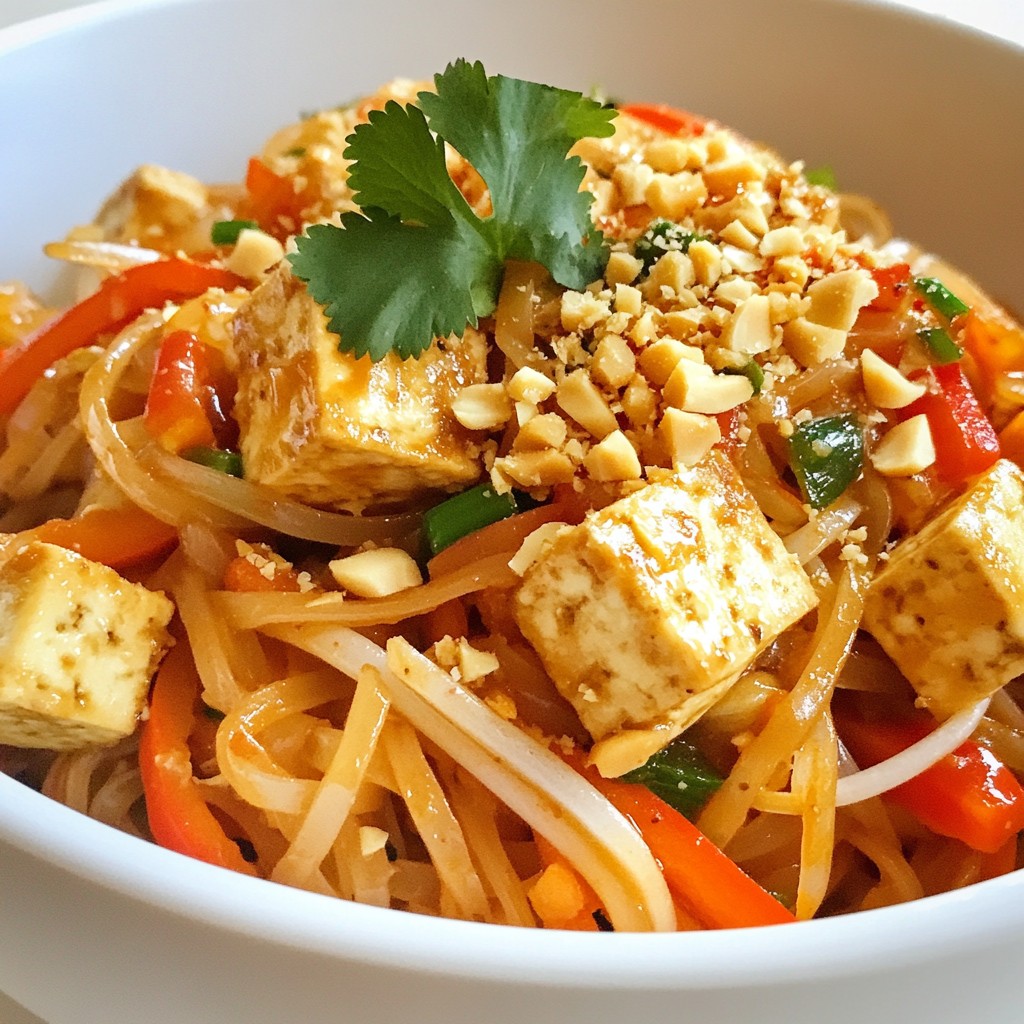
Looking for a dish that's both simple and bursting with flavor? Vegetarian Pad Thai is your answer! This classic Thai meal swaps meat for vibrant veggies and hearty tofu, creating a tasty experience everyone can enjoy. In this post, I’ll guide you through easy steps, share ingredient tips, and reveal ways to make this dish truly your own. Get ready to impress your taste buds with a satisfying vegetarian delight!
Why I Love This Recipe
- Delicious Flavor Profile: This Pad Thai is bursting with flavors from the tamarind paste, lime juice, and a hint of sweetness from the brown sugar, making each bite a delightful experience.
- Quick and Easy: With a prep time of just 20 minutes, this recipe is perfect for a busy weeknight dinner while still being satisfying and nutritious.
- Versatile Ingredients: You can easily customize this dish by adding your favorite vegetables or proteins, ensuring it suits your taste preferences.
- Healthy and Wholesome: Packed with vegetables and plant-based protein from tofu, this Pad Thai is a nutritious choice that doesn’t compromise on taste.
Ingredients
List of Ingredients for Vegetarian Pad Thai
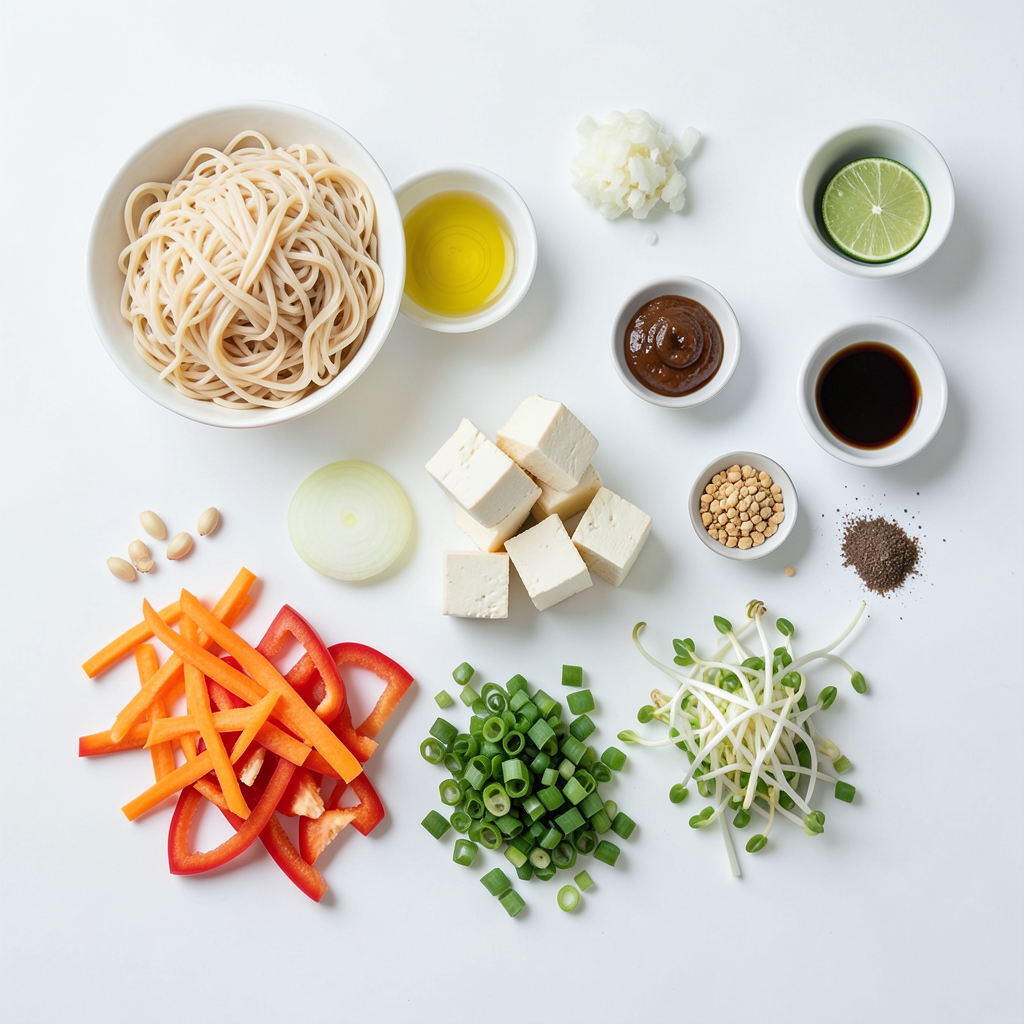
To make a delicious Vegetarian Pad Thai, you need the following ingredients:
- 8 ounces rice noodles
- 2 tablespoons vegetable oil
- 3 cloves garlic, minced
- 1 small onion, thinly sliced
- 1 cup firm tofu, cubed
- 2 large carrots, julienned
- 1 red bell pepper, sliced
- 2 cups bean sprouts
- 3 green onions, chopped
- ¼ cup crushed peanuts
- 2 tablespoons soy sauce
- 2 tablespoons tamarind paste
- 1 tablespoon brown sugar
- Juice of 1 lime
- Fresh cilantro for garnish
- Salt and pepper to taste
Nutritional Information
This Vegetarian Pad Thai serves four and offers a healthy mix of nutrients. Each serving has about:
- Calories: 320
- Protein: 12g
- Carbohydrates: 48g
- Fat: 10g
- Fiber: 4g
The tofu adds protein, while the veggies boost fiber and vitamins.
Alternative Ingredient Suggestions
You can easily swap some ingredients for variety or to suit your taste:
- Use rice vermicelli for thinner noodles.
- Try tempeh instead of tofu for a different texture.
- Add broccoli, snap peas, or zucchini for more veggies.
- Substitute almond butter for tamarind paste for a sweeter flavor.
- Use gluten-free soy sauce if you need a gluten-free dish.
These changes keep the dish exciting and flavorful!
Step-by-Step Instructions
Preparing the Rice Noodles
To start, soak the rice noodles in warm water. Let them sit for 20-30 minutes. This makes them soft and easier to cook. After soaking, drain the noodles and set them aside for later.
Cooking the Tofu and Vegetables
Next, heat two tablespoons of vegetable oil in a large skillet or wok over medium-high heat. Add three minced garlic cloves and one thinly sliced onion. Stir them for about one minute until they smell great. Then, add one cup of cubed tofu to the skillet. Sauté the tofu for about five to seven minutes. You want it golden brown. After that, toss in two large julienned carrots and one sliced red bell pepper. Stir-fry these for three to four minutes until they start to soften.
Mixing the Sauce and Combining the Ingredients
Push the tofu and veggies to one side of the skillet. On the other side, add the soaked rice noodles. In a small bowl, mix together two tablespoons of soy sauce, two tablespoons of tamarind paste, one tablespoon of brown sugar, and the juice of one lime. Pour this sauce over the noodles. Gently toss everything to combine. Add two cups of bean sprouts and three chopped green onions. Cook for another two to three minutes until all the ingredients are hot. Season with salt and pepper to taste. Serve your Pad Thai hot, topped with crushed peanuts and fresh cilantro.
Tips & Tricks
How to Achieve the Perfect Noodles
To get the best rice noodles, soak them in warm water for 20-30 minutes. This softens them but keeps them firm. After soaking, drain the noodles. They should feel slightly chewy. Avoid overcooking them; they will cook more in the skillet. Perfect noodles make your dish shine.
Customizing the Flavor Profile
You can change the taste of your Vegetarian Pad Thai easily. Add more tamarind paste for a tart flavor. For a sweeter taste, increase the brown sugar. If you like heat, add chili flakes or sriracha. Fresh lime juice brightens the dish, so don't skip it! Experiment with different veggies, too. Snap peas or broccoli can add a nice crunch.
Common Mistakes to Avoid
One common mistake is cooking the noodles too long. They should be just right when you add them to the dish. Another mistake is not stirring enough. Make sure to toss everything well, so the sauce coats all the noodles and veggies. Lastly, don’t forget to season. A pinch of salt and pepper can make a big difference!
Pro Tips
- Use Fresh Ingredients: Fresh vegetables and herbs can significantly enhance the flavor of your Pad Thai. Look for vibrant, crisp produce to make your dish stand out.
- Adjust the Spice Level: If you enjoy a bit of heat, consider adding some red pepper flakes or sriracha sauce to the dish for an extra kick.
- Perfectly Soaked Noodles: Make sure to soak the rice noodles until they are just al dente, as they will continue to cook when added to the hot skillet.
- Garnish Generously: Don’t skimp on the crushed peanuts and cilantro as they add texture and freshness that elevate the overall dish.
Variations
Gluten-Free Options
You can make vegetarian Pad Thai gluten-free. Simply swap the soy sauce for tamari. Tamari tastes similar but has no gluten. You can also use rice noodles, which are naturally gluten-free. Just check the package to be sure.
Adding Protein Alternatives
If you want more protein, add chickpeas or tempeh. Both options work well in this dish. You can also use seitan for a meat-like texture. Just make sure to cook it well so it absorbs flavor.
Seasonal Vegetable Swaps
Feel free to change the veggies based on the season. In spring, add snap peas or asparagus. In summer, toss in zucchini or bell peppers. In fall, try using butternut squash or mushrooms. This helps keep the dish fresh and exciting.
Storage Information
How to Store Leftover Pad Thai
To store your leftover Pad Thai, first let it cool down. Once cooled, place it in an airtight container. Make sure to use a container that seals well to keep moisture out. You can keep it in the fridge for up to three days. If you want to enjoy it later, consider freezing it.
Reheating Instructions
When it’s time to eat your Pad Thai again, you have a few options. The best way is to reheat it on the stove. Just add a splash of water or oil in a pan. Heat on medium until warm, stirring gently. You can also use the microwave. Place it in a microwave-safe bowl, cover it, and heat for about 2-3 minutes. Stir halfway through for even heating.
Freezing Tips
If you want to freeze your Pad Thai, it’s easy! First, let it cool completely. Then, portion it into freezer-safe bags or containers. Remove as much air as possible before sealing. Pad Thai can stay fresh in the freezer for up to three months. When you’re ready to eat, thaw it in the fridge overnight before reheating.
FAQs
What is Pad Thai?
Pad Thai is a famous Thai noodle dish. It usually has rice noodles, eggs, and meat or tofu. The dish is known for its balance of sweet, sour, and salty flavors. Traditional Pad Thai often has shrimp, but I created a vegetarian version. It uses tofu and fresh vegetables instead.
Is Vegetarian Pad Thai Healthy?
Yes, Vegetarian Pad Thai can be healthy. It offers a good mix of protein, fiber, and vitamins. Tofu provides protein, while veggies add nutrients. Rice noodles are low in fat, making this dish a smart choice. You can also control the oil and sugar to keep it lighter.
Can I make Pad Thai in advance?
Yes, you can make Pad Thai in advance. Prepare the dish up to a few hours ahead. Store it in the fridge until you're ready to eat. Just reheat it in a pan when you're ready. This makes it a great option for meal prep.
What are the best ways to serve Pad Thai?
Serve Pad Thai hot for the best taste. You can add toppings like crushed peanuts and fresh cilantro. Lime wedges are great for squeezing over the dish. This gives it a fresh kick. You can also serve it with extra soy sauce on the side for flavor.
How can I adjust the spice level?
To change the spice level, add or reduce chili paste or crushed red pepper. You can mix in a bit of sriracha for heat. If you prefer it mild, skip the spicy elements. Always taste as you go to find the right level for you.
This blog post covered all you need to make a tasty Vegetarian Pad Thai. We explored the key ingredients, including tasty alternatives. You learned step-by-step how to prepare and cook with tips to avoid mistakes. We also discussed storage and ways to customize your dish.
In the end, creating a delicious Pad Thai at home is simple and fun. Enjoy experimenting with flavors and ingredients that suit your taste! Cooking this dish can lead to great meals for you and your friends.