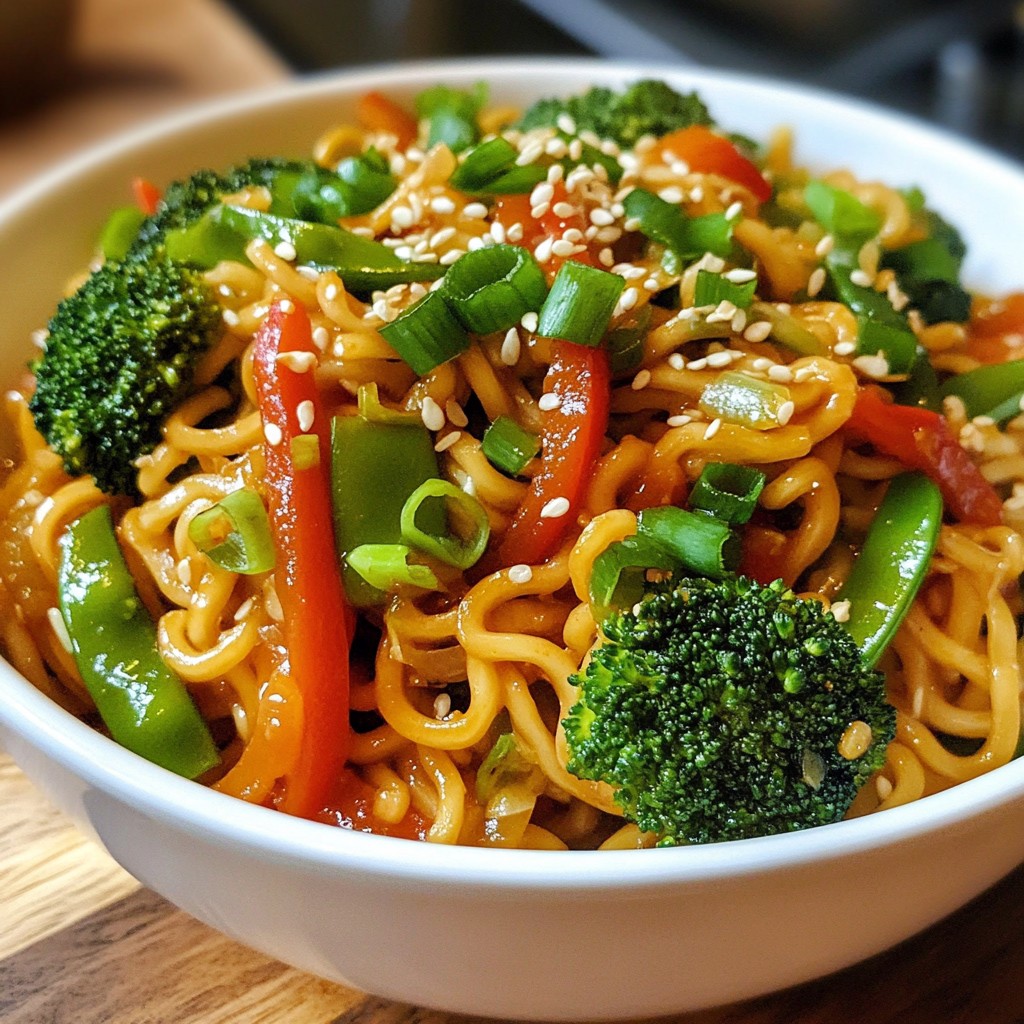
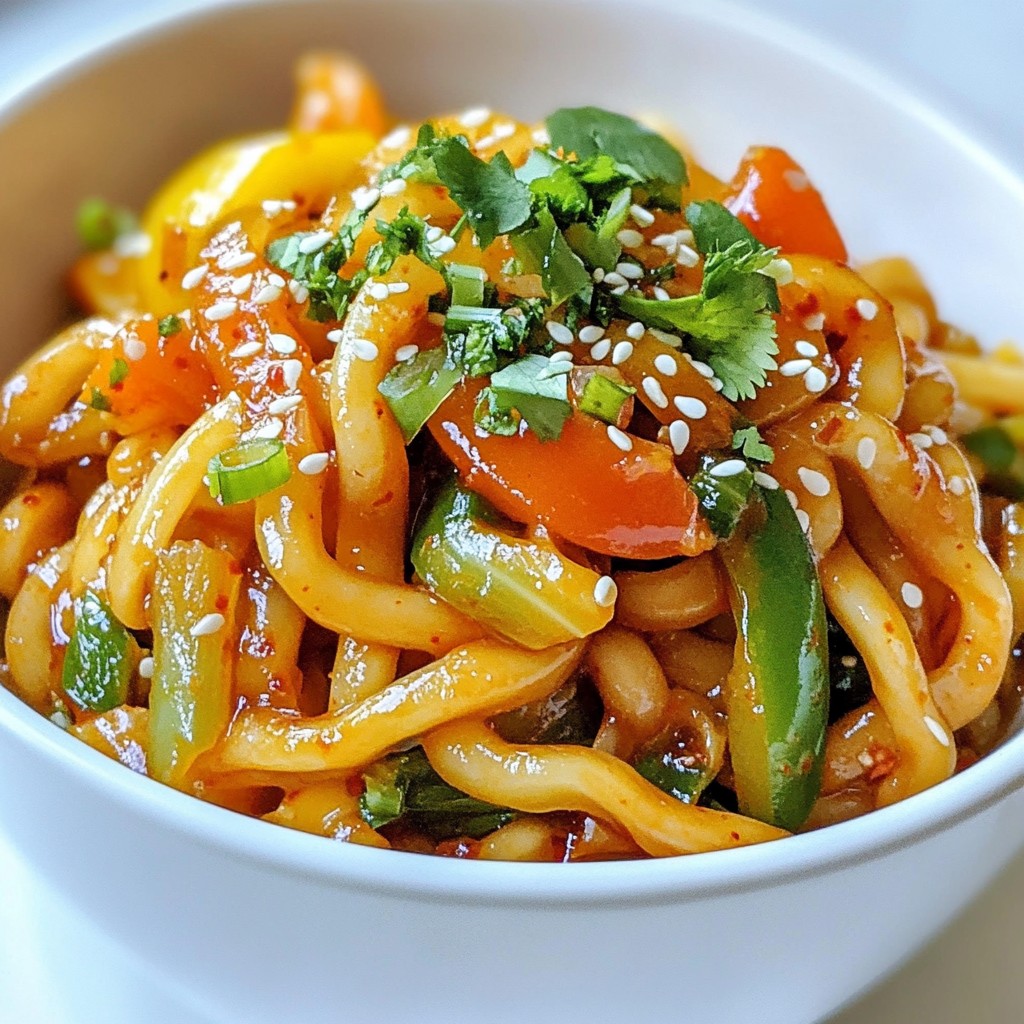
Are you ready to spice up your dinner routine? Let me introduce you to Spicy Korean Gochujang Noodles, a dish that's both flavorful and simple. With just a few key ingredients like gochujang and fresh veggies, you can create a meal that bursts with taste. Whether you're a beginner or a seasoned cook, this recipe is easy to follow and sure to impress. Let's dive into the deliciousness!
Why I Love This Recipe
- Bold Flavors: The combination of gochujang, sesame oil, and honey creates a perfect balance of heat and sweetness.
- Quick & Easy: This dish can be made in just 20 minutes, perfect for busy weeknights.
- Customizable: You can easily adjust the vegetables and protein to suit your taste or dietary needs.
- Healthy Option: Packed with vegetables, this dish is a nutritious choice without sacrificing flavor.
Ingredients
Essential Ingredients
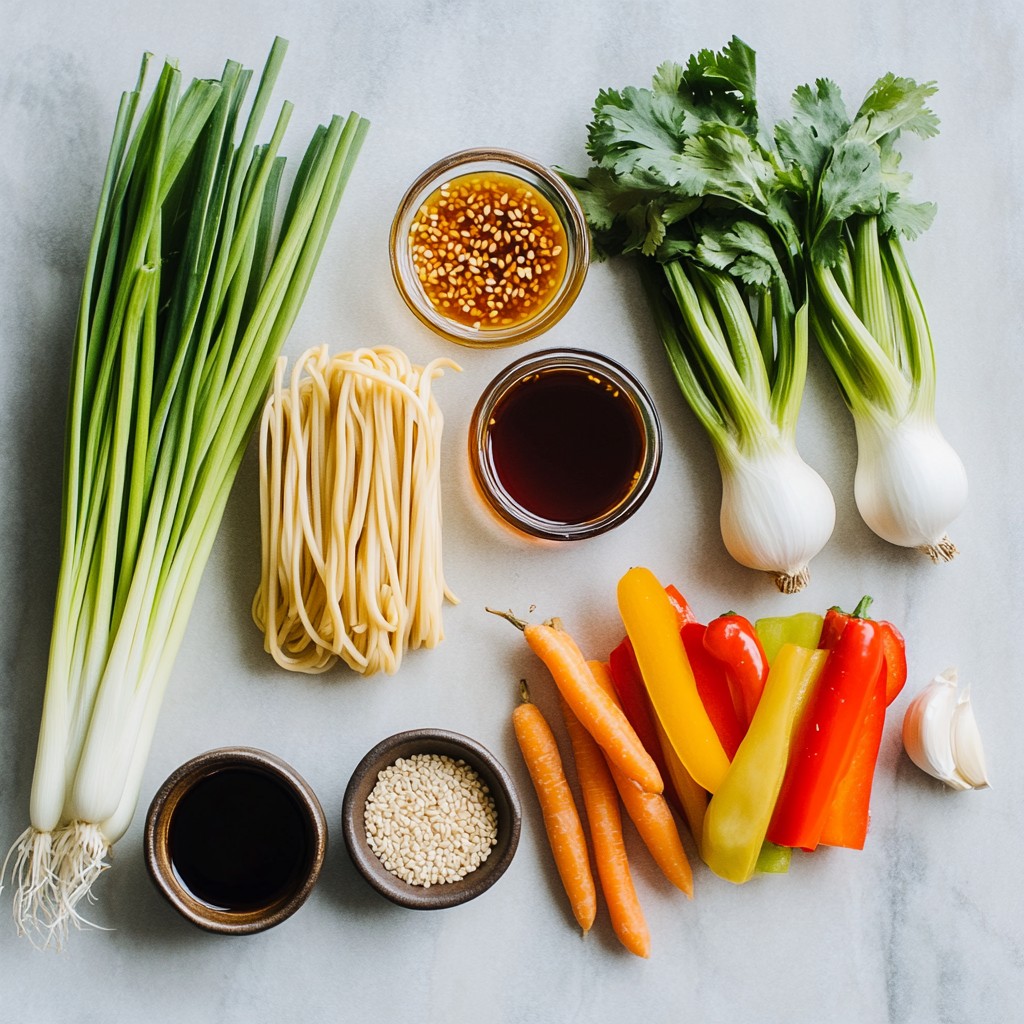
- 200g noodles of your choice (preferably udon or soba)
- 2 tablespoons gochujang (Korean chili paste)
- 1 tablespoon sesame oil
- 1 tablespoon soy sauce
- 1 tablespoon honey or maple syrup
- 1 teaspoon minced garlic
- 1 teaspoon minced ginger
- 1 cup mixed vegetables (carrots, bell peppers, and bok choy)
- 2 green onions, sliced
- 1 tablespoon sesame seeds for garnish
- Fresh cilantro for garnish
- Salt and pepper to taste
The core of this dish lies in its balance of flavors. The gochujang adds heat and depth, while the sesame oil gives a nutty finish. The mixed veggies not only add color but also a nice crunch. You can play with these ingredients to suit your tastes.
Optional Ingredients
- Additional proteins (tofu, chicken, beef)
- Extra vegetables or herbs
- Alternative sweeteners or sauces
If you want more protein, tofu or chicken works great. Feel free to toss in any veggies you have on hand. This dish is all about flexibility. You can even swap out the sweetener for something different, like agave syrup. This way, you can make the dish your own.
Step-by-Step Instructions
Cooking the Noodles
To cook the noodles, start by boiling water in a large pot. Add the noodles once the water is bubbling. Follow the package instructions for cooking time. This usually takes about 6-8 minutes. Stir the noodles occasionally to keep them from sticking. Once cooked, drain them in a colander. Rinse the noodles under cold water to stop the cooking. This helps keep them firm and prevents mushiness. Set the rinsed noodles aside for later.
Preparing the Gochujang Sauce
For the sauce, grab a small bowl. Add 2 tablespoons of gochujang, 1 tablespoon of sesame oil, and 1 tablespoon of soy sauce. Next, mix in 1 tablespoon of honey or maple syrup, 1 teaspoon of minced garlic, and 1 teaspoon of minced ginger. Whisk all the ingredients together until smooth. If you want a thinner sauce, add a little water. Taste your sauce to adjust the sweetness or spice level.
Sautéing the Vegetables
In a large skillet or wok, heat 1 tablespoon of oil over medium-high heat. You can use vegetable or sesame oil. Once hot, toss in your mixed vegetables. Stir-fry them for about 3-4 minutes. You want them to be tender but still crunchy. This keeps the flavors fresh and bright.
Combining and Serving
Now, it's time to mix everything. Add the cooked noodles to the skillet with the vegetables. Pour the gochujang sauce over the top. Toss everything together for 2-3 minutes. You want the noodles to be well coated and heated through. Taste the dish and add salt and pepper as needed. For serving, transfer the spicy noodles to bowls. Top them with sliced green onions, sesame seeds, and fresh cilantro for a pop of color.
Tips & Tricks
How to Perfect the Noodles
- Avoiding overcooking: To keep your noodles firm, watch the cooking time. Follow the package instructions closely. As soon as they are tender, drain them. Rinse them under cold water. This stops the cooking and keeps them from getting mushy.
- Ideal noodle types and their flavor profiles: I love using udon or soba noodles for this dish. Udon are thick and chewy, giving a nice bite. Soba noodles have a nutty flavor and are a bit lighter. Choose what you like best!
Adjusting Spiciness Level
- Substitutions for milder options: If you want less heat, use less gochujang. You can also mix in some soy sauce or honey to balance the spice. This will still give you a great flavor without too much heat.
- Enhancing or reducing heat in the dish: To kick up the spice, add more gochujang or some chili flakes. For a milder taste, add more vegetables or a splash of cream. This helps tone down the heat while keeping it tasty.
Serving Suggestions
- Ideal side dishes to accompany the noodles: Serve these noodles with a simple cucumber salad. The crunch and freshness balance the heat. Kimchi is also a great choice for added flavor.
- Drink pairings for balance: Try pairing these noodles with iced green tea or a light beer. Both complement the spicy flavors well. A sweet drink can also help cool your palate between bites.
Pro Tips
- Use Fresh Ingredients: Fresh vegetables and herbs will enhance the flavor and texture of your dish, making it more vibrant and delicious.
- Adjust the Spice Level: Feel free to modify the amount of gochujang based on your spice tolerance. Start with less and add more as you mix to find your perfect heat.
- Customize Your Veggies: You can swap in any seasonal vegetables you have on hand, such as zucchini or snap peas, to keep the dish exciting and fresh.
- Serve with Protein: Add grilled chicken, tofu, or shrimp for a heartier meal and an extra layer of flavor that complements the gochujang sauce.
Variations
Vegan/Vegetarian Modifications
To make these spicy noodles vegan or vegetarian, you can swap in plant-based proteins. Tofu is a great choice. It absorbs the sauce well and adds texture. You can also use tempeh or seitan for added chewiness.
For sauces, consider using coconut aminos instead of soy sauce. This option is soy-free and has a hint of sweetness. You can also try tahini for a creamy twist.
Gluten-Free Options
If you need gluten-free noodles, look for brands like rice noodles or gluten-free udon. These options taste great and hold the sauce well.
For soy sauce, use tamari, which is gluten-free. There are also gluten-free versions of gochujang available. Make sure to check the labels.
Ingredient Swaps
Feel free to get creative with vegetables! Zucchini, snap peas, or mushrooms can add different flavors. You can also mix in some spinach for extra nutrition.
When it comes to sweeteners, you can use agave syrup or brown sugar instead of honey. For oils, avocado oil or olive oil can work well too. These swaps keep the dish fresh and exciting!
Storage Info
Storing Leftovers
To keep your spicy Korean gochujang noodles fresh, place them in an airtight container. Make sure to cool the noodles to room temperature first. Refrigerate them within two hours of cooking. Proper storage helps maintain flavor and texture. You can store the leftovers for up to three days. After that, they may lose their taste and quality.
Reheating Techniques
When it's time to enjoy your leftovers, you want to heat them without losing their texture. The best method is to use a skillet. Heat a splash of oil over medium heat. Add the noodles and stir gently for about five minutes. You can also use a microwave. If you choose this method, place the noodles in a microwave-safe dish. Add a splash of water to keep them moist. Heat in short bursts, stirring in between.
Sometimes, reheating can dull the flavors. To fix this, consider re-seasoning your noodles. A dash of soy sauce or a bit more gochujang can bring back the zing. Taste and adjust the seasoning as you go!
FAQs
What is Gochujang and where can I buy it?
Gochujang is a thick, red chili paste from Korea. It has a sweet and spicy flavor. This paste adds depth to many dishes. You can buy gochujang at Asian markets or online. Look for brands like Sunchang or Chung Jung One. Make sure to check the label for quality.
Can I make Spicy Korean Gochujang Noodles ahead of time?
Yes, you can prep the components in advance. Cook the noodles and store them in the fridge. Keep the gochujang sauce in a separate container. Chop your vegetables ahead of time too. They should stay fresh for a few days. When ready to eat, just reheat everything and mix.
How spicy are these noodles?
The spice level varies by the amount of gochujang you use. If you want more heat, add extra gochujang. To make it milder, use less. You can also mix in some peanut butter or cream for a creamy texture. Adjust the flavors until they suit your taste.
In this post, we explored the ingredients and steps for making Spicy Korean Gochujang Noodles. We discussed essential and optional ingredients to personalize your dish. You learned how to cook noodles, prepare the sauce, sauté veggies, and serve it all together. I shared tips for perfect noodles and spiciness adjustments. Remember, you can easily swap ingredients to suit your taste. Enjoy experimenting with flavors in your kitchen!