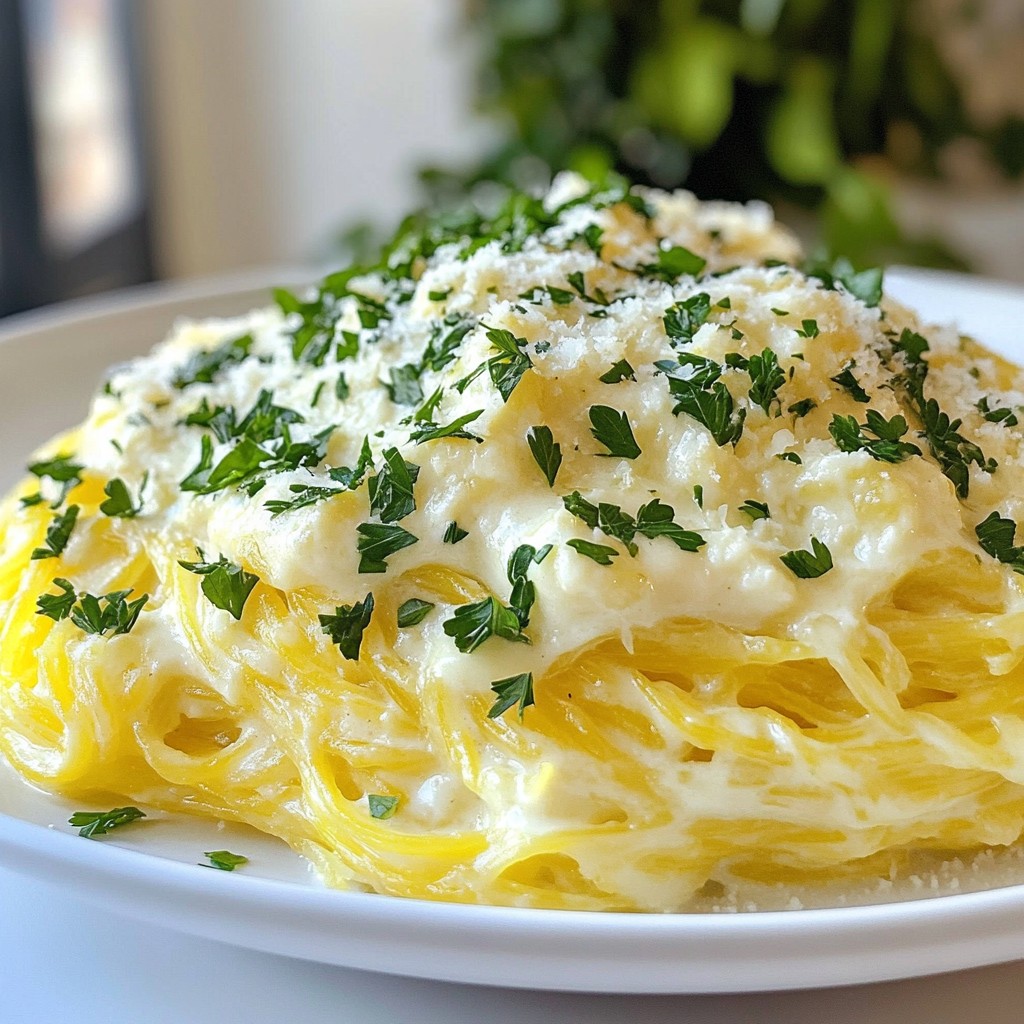
Are you ready to enjoy a creamy, delicious meal without the carbs? Spaghetti Squash Alfredo is your answer! This dish takes the classic alfredo flavor and makes it lighter using spaghetti squash. I'll guide you through simple steps that make cooking fun and easy. Get your apron on, and let's create a flavorful dish that will impress your friends and family. It’s time to make dinner exciting again!
Why I Love This Recipe
- Healthy Alternative: This creamy spaghetti squash alfredo offers a nutritious twist on a classic dish, perfect for those looking to reduce carbs and increase vegetable intake.
- Easy to Make: With simple ingredients and straightforward steps, this recipe is quick to prepare, making it ideal for busy weeknights.
- Creamy Texture: The combination of cauliflower and almond milk creates a rich, creamy sauce that satisfies cravings without the heaviness of traditional alfredo.
- Customizable: This dish can be easily adapted with different seasonings or toppings, allowing you to personalize it to your taste.
Ingredients
List of Ingredients
- Medium spaghetti squash
- 1 cup cauliflower florets
- 1 cup unsweetened almond milk
- 2 tablespoons nutritional yeast
- 2 cloves garlic, minced
- 1 tablespoon olive oil
- 1/2 teaspoon onion powder
- 1/4 teaspoon nutmeg
- Salt and pepper to taste
- Fresh parsley, chopped for garnish
- Grated Parmesan cheese (optional, for serving)
To make this dish, you start with a medium spaghetti squash. The squash gives the dish its name and a fun texture. Next, you need cauliflower florets. These become the base of your creamy sauce. Unsweetened almond milk adds a nice smoothness. Nutritional yeast gives the sauce a cheesy flavor without dairy.
Garlic adds a bold taste, while olive oil keeps everything moist. Onion powder and nutmeg bring warmth to the dish. Don't forget salt and pepper. They help the flavors pop. Finally, fresh parsley adds a touch of color and freshness on top. If you like, you can sprinkle grated Parmesan cheese for extra richness.
These ingredients combine to create a creamy and flavorful dish that delights the senses. Each component plays a key role, making this spaghetti squash alfredo a favorite for many.
Step-by-Step Instructions
Preparation of Spaghetti Squash
1. Preheating the oven
First, preheat your oven to 400°F (200°C). This step helps cook the squash evenly.
2. Cutting and preparing the squash
Carefully cut the spaghetti squash in half lengthwise. Use a spoon to scoop out the seeds. Brush the inside with olive oil. Sprinkle salt and pepper on both halves for flavor.
3. Roasting process
Place the squash halves cut side down on a baking sheet. Roast in the oven for about 40-45 minutes. The squash should be tender and easy to shred with a fork when ready.
Making the Alfredo Sauce
1. Steaming or boiling cauliflower
While the squash roasts, steam or boil the cauliflower florets. Cook them for about 10-12 minutes until they are soft. Drain and set them aside for blending.
2. Blending the sauce ingredients
In a blender, add the steamed cauliflower, almond milk, nutritional yeast, minced garlic, onion powder, nutmeg, salt, and pepper. Blend until the mixture is smooth and creamy. Taste and adjust the seasoning if needed.
3. Heating the sauce
Pour the blended mixture into a saucepan. Heat it over medium heat, stirring occasionally. Warm it through until it reaches your desired temperature.
Final Assembly
1. Scraping the squash into strands
After the squash has roasted, let it cool for a few minutes. Use a fork to scrape the flesh into strands. This creates the "spaghetti" part of your dish.
2. Combining squash with sauce
Divide the squash strands among plates. Generously pour the creamy alfredo sauce over the top. Make sure each plate gets a good amount of sauce.
3. Garnishing the dish
To finish, garnish each plate with fresh parsley. If you like, add some grated Parmesan cheese for an extra touch of flavor. Enjoy your creamy and flavorful dish!
Tips & Tricks
Perfecting the Roasting Process
To get the best spaghetti squash, check it after 40 minutes. The skin should be slightly soft. You should be able to poke it easily with a fork. If it feels hard, give it more time.
For the cauliflower, steam or boil it for about 10-12 minutes. You want it soft and tender. If it's still firm, cook it a bit longer. You need a creamy sauce, so soft cauliflower is key.
Enhancing the Flavor
Tasting is vital! Add salt and pepper a little at a time. If it lacks flavor, try more garlic or nutritional yeast. These add depth and richness.
For extra taste, consider using a splash of lemon juice. It brightens the dish and adds a lovely zing. You can also swap nutritional yeast for grated cheese for a richer flavor.
Serving Suggestions
Pair your spaghetti squash Alfredo with a fresh side salad. A mix of greens and a light vinaigrette works well. You can also add grilled chicken or shrimp for protein.
For a beautiful presentation, twirl the squash strands on the plate. Drizzle the sauce over the top. Finish with chopped parsley and a sprinkle of Parmesan cheese for color and taste.
Pro Tips
- Choose the Right Squash: Look for a spaghetti squash that feels heavy for its size and has a smooth, firm skin to ensure optimal flavor and texture.
- Perfectly Creamy Sauce: For an extra creamy alfredo sauce, blend the cauliflower and almond milk until completely smooth, and consider adding a splash of lemon juice for brightness.
- Customize Your Seasoning: Don’t hesitate to adjust the seasoning in the sauce according to your taste preferences; garlic powder or paprika can add a nice touch.
- Leftovers Storage: Store any leftover spaghetti squash and sauce separately in airtight containers in the fridge for up to 3 days. Reheat gently to preserve texture.
Variations
Vegan Alternatives
You can easily make this dish vegan. First, if you want a creamier base, consider substituting almond milk with soy milk or coconut milk. Both options add a rich flavor and texture.
For the nutritional yeast, if you are out, you can use ground cashews or hemp seeds. They provide a similar cheesy taste. Just blend them well into your sauce to ensure smoothness.
Additional Ingredients
Want to boost the nutrition? Add more veggies! Spinach, kale, or broccoli work great. Simply steam them and mix them into the sauce.
For protein, consider adding chickpeas or cooked lentils. They blend well with the dish and add a hearty touch.
You can also change up the herbs. Try adding fresh basil, thyme, or oregano. They enhance the flavor and aroma of the dish.
Gluten-Free Options
This recipe is naturally gluten-free, thanks to spaghetti squash. Always check labels on any products you use to ensure they are gluten-free.
If you want extra flavor, you can use gluten-free pasta alongside the squash. Look for brands made from rice or quinoa to keep it gluten-free. These options pair well with the creamy sauce.
Storage Info
Storing Leftovers
To keep your spaghetti squash alfredo fresh, store it in the fridge. Use an airtight container. It can last about three to five days. Make sure to let it cool before sealing. When you are ready to eat it, take it out.
For reheating, use the microwave or stovetop. If using the microwave, heat it in short bursts. Stir in between to ensure even warming. On the stovetop, add a little almond milk to prevent drying. Heat it on low, stirring often.
Freezing the Dish
You can freeze spaghetti squash alfredo for later. Start by letting it cool completely. Then, scoop it into freezer-safe bags or containers. Remove as much air as possible. This helps to prevent freezer burn.
To thaw, place it in the fridge overnight. For quick thawing, use the microwave on low power. After thawing, reheat it just like you would with leftovers. Add a splash of almond milk if needed. Enjoy your creamy dish anytime!
FAQs
What can I substitute for nutritional yeast?
If you need a substitute for nutritional yeast, try using grated Parmesan cheese. This adds a similar cheesy flavor. You can also use ground sunflower seeds or cashews for a nutty taste. If you prefer a vegan option, consider using miso paste. Just remember to adjust the salt since miso can be salty.
How do I know when spaghetti squash is cooked?
You can tell that spaghetti squash is cooked by checking its skin. When it's tender and easily pierced with a fork, it's ready. The flesh inside should be soft and should shred easily into strands. If you can scrape it with a fork and it looks like spaghetti, then you did it right!
Can I make this recipe gluten-free?
Yes, this recipe is naturally gluten-free! Just make sure to check the almond milk label. Most brands are gluten-free, but it's always good to double-check. You can serve it without any gluten-containing products, and you won't miss the gluten at all.
How long will leftovers last in the refrigerator?
Leftovers can last in the fridge for about three to five days. Store them in an airtight container for best results. If you want to keep them longer, consider freezing the dish. Just remember to thaw it before reheating for a tasty meal later.
This post shared how to make a tasty spaghetti squash alfredo. You learned about key ingredients, like cauliflower and almond milk, and how to prepare them. We broke down each step for cooking and offered tips for great results. You also discovered variations and storage tips to keep leftovers fresh.
Remember, cooking can be fun and creative! Experiment with flavors and enjoy your meal. Feel free to share this recipe with others who love cooking too.