Are you ready to impress your family with a delicious Herb & Garlic Roasted Turkey Breast? This recipe packs juicy flavor with easy steps. You’ll learn how to marinate the turkey, roast it to perfection, and ensure it stays moist. Plus, I’ll share tips for presentation and tasty side dishes. Let’s dive into the world of savory herbs and garlic that will make your turkey the star of the meal!
Why I Love This Recipe
- Delicious Flavor Profile: The combination of fresh herbs and garlic creates an aromatic and savory flavor that enhances the turkey’s natural taste.
- Easy Preparation: This recipe is simple and requires minimal prep time, making it perfect for both beginners and seasoned cooks.
- Perfect for Gatherings: A bone-in turkey breast provides a beautiful presentation and is ideal for family dinners and holiday celebrations.
- Moist and Juicy Results: Roasting with broth and resting the turkey ensures that every slice is juicy and full of flavor.
Ingredients
Main Ingredients
- 1 bone-in turkey breast (about 4-6 pounds)
- 4 cloves garlic, minced
- 2 tablespoons fresh rosemary, chopped
- 2 tablespoons fresh thyme, chopped
- 2 tablespoons fresh parsley, chopped
Additional Seasoning and Flavoring
- 1/4 cup olive oil
- 1 lemon, zested and juiced
- Salt and pepper to taste
- 1 cup low-sodium chicken broth
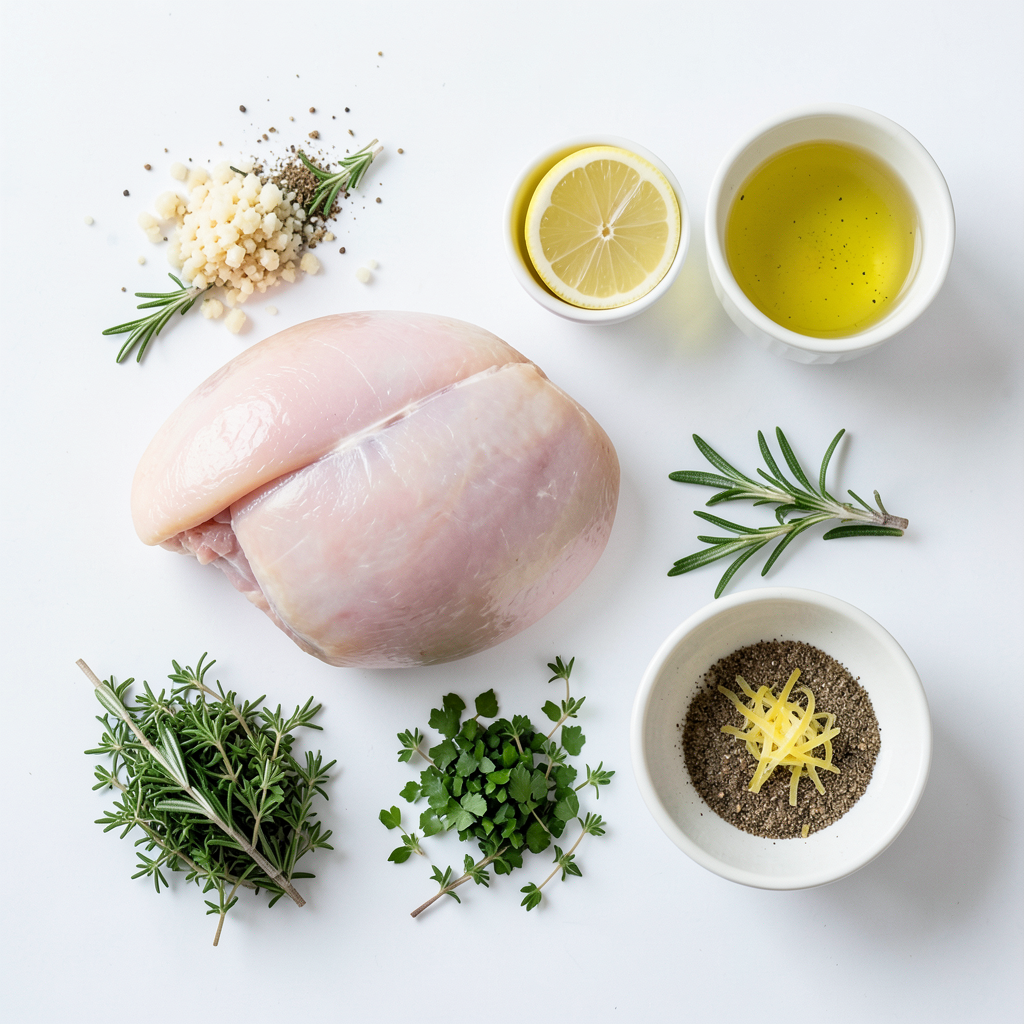
To make a tasty herb and garlic roasted turkey breast, start with fresh ingredients. The turkey breast should weigh between 4 to 6 pounds. This size cooks well and serves about six people. Garlic adds a strong and savory flavor. Use four cloves, minced finely to blend well with other herbs.
Rosemary, thyme, and parsley bring freshness to the dish. You will need two tablespoons of each herb, chopped. Fresh herbs work best, but dried herbs can be used in a pinch.
Next, you’ll need a quarter cup of olive oil. This helps the herbs stick to the turkey and keeps it moist. One lemon, zested and juiced, adds brightness to the flavor. Don’t forget to season with salt and pepper to taste!
Finally, one cup of low-sodium chicken broth will keep the turkey juicy while it roasts. This broth adds flavor and moisture. All these ingredients come together to create a juicy and flavorful turkey breast that you and your guests will love.
Step-by-Step Instructions
Preparation Steps
- Preheat your oven to 350°F (175°C).
- In a bowl, mix minced garlic, rosemary, thyme, parsley, olive oil, lemon zest, and lemon juice. This creates a tasty herb mixture.
Turkey Seasoning and Roasting
- Pat the turkey breast dry with paper towels.
- Season it well inside and out with salt and pepper.
- Rub the herb mixture all over the turkey. Make sure to get it under the skin.
- Place the turkey breast in a roasting pan, breast side up.
- Pour chicken broth into the bottom of the pan for moisture.
- Cover the turkey loosely with aluminum foil to keep it from browning too much.
Cooking and Resting
- Roast the turkey breast for about 45 minutes per pound. Check for a safe internal temperature of 165°F (75°C).
- Remove the foil during the last 30 minutes for crispy skin.
- After cooking, let the turkey rest for 15-20 minutes before carving. This step keeps it juicy.
Tips & Tricks
Perfecting the Herb Flavor
To boost the flavor of your herb mixture, chop the herbs finely. This allows their oils to release better. Mix the garlic, rosemary, thyme, and parsley with olive oil, lemon zest, and juice. Let the mixture sit for at least 30 minutes. This resting time helps the herbs infuse their flavors into the oil.
Ensuring Juiciness
To keep your turkey breast juicy, cover it with foil during most of the roasting time. This traps moisture and prevents the meat from drying out. Once it reaches a golden color, remove the foil to crisp the skin. Rest the turkey for 15-20 minutes after cooking. This resting time allows the juices to redistribute, ensuring every slice is tender and moist.
Presentation Tips
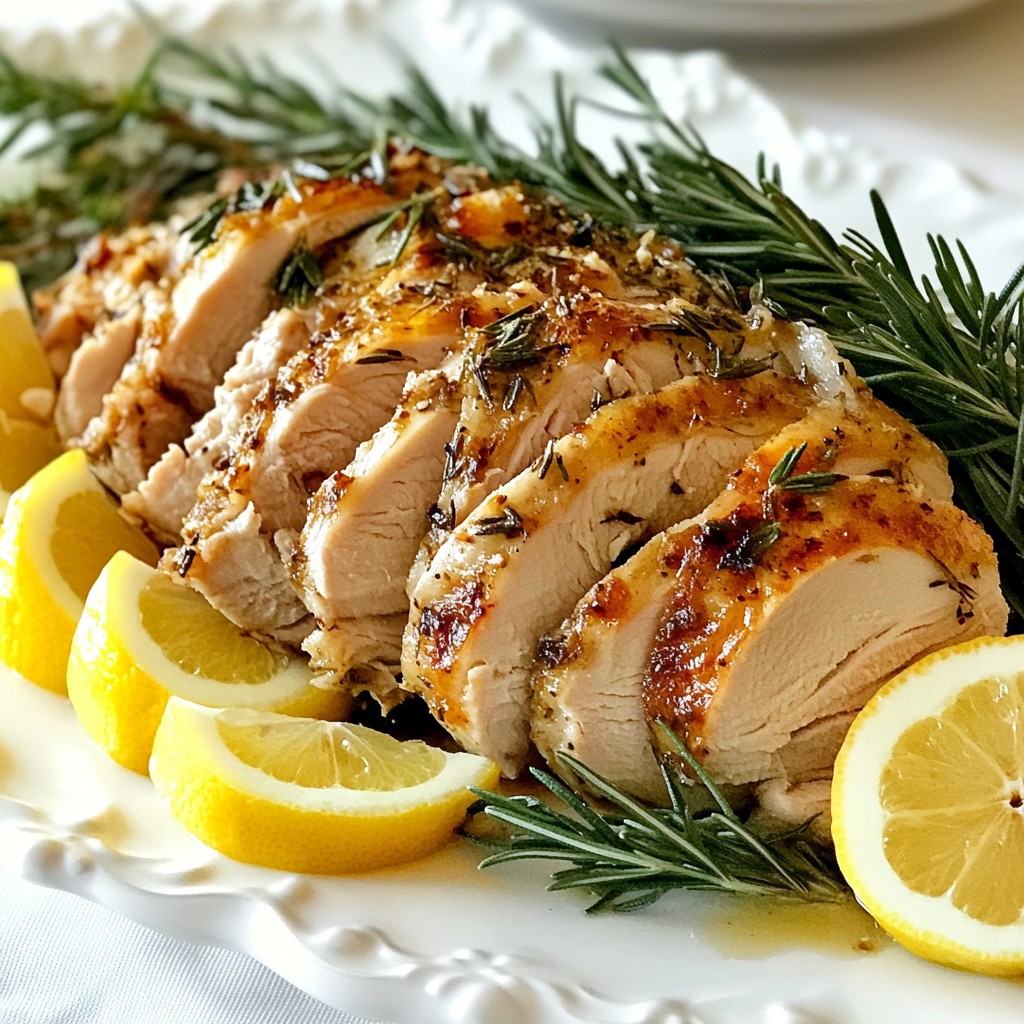
When serving, slice the turkey breast and arrange it on a large platter. Garnish with fresh herb sprigs and lemon wedges. This adds a lovely touch. Serve with seasonal vegetables like roasted carrots or green beans. These sides complement the herb and garlic flavors well, creating a beautiful and tasty meal.
Pro Tips
- Resting the Turkey: Allow the turkey to rest after roasting to keep the juices locked in, resulting in a moist and flavorful dish.
- Flavor Infusion: For deeper flavor, marinate the turkey breast in the herb mixture overnight in the refrigerator before roasting.
- Using a Meat Thermometer: Invest in a meat thermometer to ensure the turkey breast reaches the perfect internal temperature of 165°F (75°C) without overcooking.
- Homemade Gravy: Use the drippings from the roasting pan to create a delicious homemade gravy, enhancing the meal further.
Variations
Different Herb Combinations
You can swap out the herbs in this recipe to fit your taste. Use sage instead of rosemary for a warmer flavor. Oregano can replace thyme, adding a touch of earthiness. If you don’t have parsley, try basil for a sweet twist. For a citrusy note, add orange zest to your herb mix.
Cooking Method Alternatives
If you want to slow-roast your turkey breast, set your oven to 325°F (163°C). This method takes longer but keeps the meat juicy. For an air fryer, cook at 360°F (182°C) for about 30 minutes per pound. Check the turkey's internal temperature to ensure it's 165°F (75°C). When cooking smaller or larger pieces, adjust the time based on weight.
Flavor Enhancements
For extra flavor, toss sliced apples or pears into the roasting pan. These fruits add a nice sweetness. You can also add onion and garlic for more depth. To make gravy, save the pan drippings. Strain the drippings into a pot, add flour, and whisk until smooth. Cook until thick, then serve over your turkey slices.
Storage Info
Refrigeration Guidelines
To store leftover turkey, place it in an airtight container. This keeps the turkey fresh. You can also wrap it tightly in plastic wrap or foil. For best taste, eat leftover turkey within three to four days. If you wait longer, the flavor and texture may change.
Freezing Tips
To freeze leftover turkey breast, slice it first. This helps it freeze faster and easier to use later. Place the slices in freezer bags or airtight containers. Be sure to remove as much air as possible. You can store the turkey in the freezer for up to six months.
When you want to eat the frozen turkey, take it out and thaw it in the fridge overnight. For a quick option, use the microwave on the defrost setting. After thawing, reheat the turkey in the oven at 350°F (175°C) until it reaches an internal temperature of 165°F (75°C). This way, your turkey will stay juicy and flavorful.
FAQs
How long to cook a turkey breast per pound?
The cooking time for turkey breast is about 45 minutes per pound. If your turkey breast weighs 4 pounds, it will take about 3 hours. Always check the turkey's temperature to ensure it cooks evenly. This method helps keep the meat juicy and flavorful.
Can I use dried herbs instead of fresh?
Yes, you can use dried herbs in place of fresh ones. Use about one-third of the amount. For example, if the recipe calls for 2 tablespoons of fresh rosemary, use only about 2 teaspoons of dried. Dried herbs can give strong flavors, so adjust to your taste.
What internal temperature should turkey breast be?
The turkey breast must reach an internal temperature of 165°F (75°C). This temperature ensures harmful bacteria are killed, making your meal safe. Use a meat thermometer to check in the thickest part, avoiding the bone for an accurate reading.
How to slice turkey breast for serving?
To slice turkey breast, first let it rest for 15-20 minutes after cooking. This step helps keep juices inside. Use a sharp knife to cut against the grain. This will give you tender slices. Arrange the slices on a platter, garnishing with fresh herbs or lemon wedges for a nice touch.
This guide covered how to prepare a delicious roasted turkey breast. You learned about the main ingredients, from fresh herbs to olive oil, and how to roast it perfectly. I shared important tips for flavor, juiciness, and presentation. You now have ideas for variations and storage options. Remember, the key is to keep the turkey moist and let it rest before carving. Follow these steps, and you’ll impress everyone with your meal. Happy cooking!