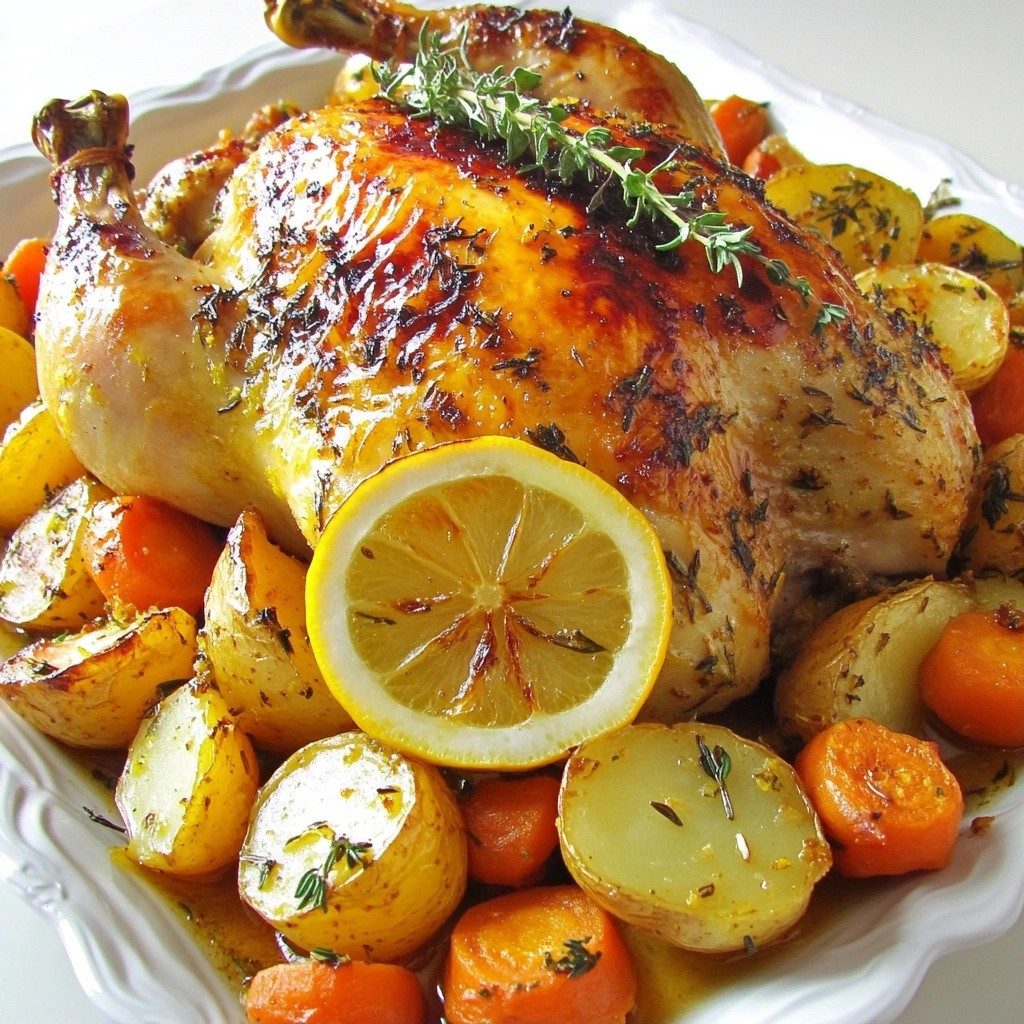
Are you craving a delicious chicken dish that won’t break the bank? Look no further! My Frugal Lemon Thyme Roasted Chicken Delight Recipe is simple, tasty, and perfect for any weeknight meal. Packed with fresh flavors and easy to prepare, this dish will impress your family and friends without straining your budget. Dive into this guide, and let me show you how to create a mouthwatering meal while saving money!
Why I Love This Recipe
- Delicious Flavor Combination: The bright acidity of the lemon paired with the earthy notes of thyme creates a delightful flavor profile that elevates the roasted chicken.
- Budget-Friendly: This recipe uses a whole chicken and simple vegetables, making it an economical choice for feeding a family without compromising on taste.
- Easy Preparation: With minimal prep time and straightforward instructions, this dish is perfect for both novice cooks and seasoned chefs looking for a hassle-free meal.
- Versatile Sides: The roasted vegetables can be easily swapped or added to, allowing you to customize the dish according to your preferences or what you have on hand.
Ingredients
List of Required Ingredients
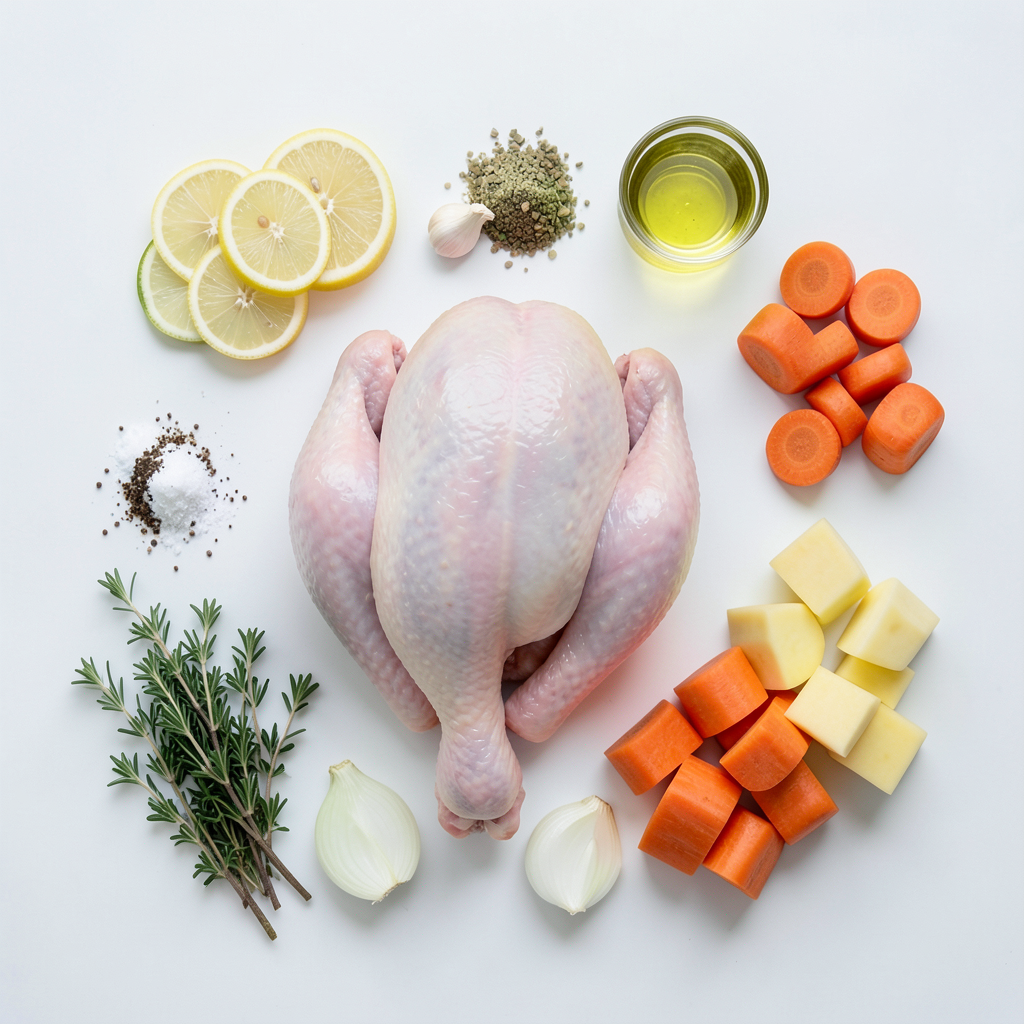
- 1 whole chicken (about 4-5 lbs)
- 2 lemons, one sliced and one juiced
- 1 bunch of fresh thyme (or 2 teaspoons dried thyme)
- 4 cloves of garlic, minced
- 4 tablespoons olive oil
- Salt and pepper to taste
- 1 onion, quartered
- 2 cups carrots, chopped
- 2 cups potatoes, diced
To start, you need a whole chicken. Look for one weighing around 4 to 5 pounds. Fresh lemons add bright flavor, so grab two. One lemon will be sliced, and the other will be juiced. Fresh thyme is best, but dried thyme works too. You will need a bunch or just two teaspoons if using dried. Minced garlic adds depth, so use four cloves. Olive oil keeps everything moist, so measure out four tablespoons. Don’t forget salt and pepper to taste. For the veggies, quarter one onion, chop two cups of carrots, and dice two cups of potatoes.
Budget-Friendly Substitutes
- Use frozen chicken instead of fresh.
- Swap fresh thyme for dried herbs like oregano or basil.
- Seasonal veggies like squash or zucchini can replace carrots and potatoes.
If you want to save more, use frozen chicken. It’s often cheaper and lasts longer. You can swap fresh thyme for dried herbs like oregano or basil. Seasonal veggies can also help. Try squash or zucchini if carrots and potatoes are costly. This keeps your dish tasty and budget-friendly.
Essential Kitchen Tools
- A sturdy roasting pan
- A sharp knife for carving
- Mixing bowls for marinade
- Measuring spoons for precision
You will need a sturdy roasting pan to hold the chicken and veggies. A sharp knife helps in carving the chicken once it’s done. Mixing bowls are great for making the marinade. Use measuring spoons to get exact amounts for the marinade. Having the right tools makes cooking easier and more fun!
Step-by-Step Instructions
Prepping the Chicken
To start, you need to season the chicken well. First, pat the chicken dry with paper towels. This helps the skin get crispy. In a bowl, mix olive oil, minced garlic, lemon juice, salt, and pepper. Rub this marinade all over the chicken. Make sure to get some under the skin. This adds flavor right where you want it. Stuff the chicken's cavity with the sliced lemon and thyme. This will make the chicken fragrant and tasty.
Roasting Methods
Set your oven to 375°F (190°C). This is the ideal temperature for roasting. If your chicken weighs around 4-5 lbs, roast it for about 1 hour and 15 minutes. You want the inside to reach 165°F (75°C). Check this with a meat thermometer. Basting the chicken halfway through helps keep it moist. Use the pan juices for this.
Final Touches
Let the chicken rest for 10-15 minutes after roasting. This step is crucial. It allows the juices to settle, making each bite juicy. When carving, use a sharp knife. Start with the legs and then slice the breast. Arrange the pieces on a platter with the roasted veggies. For a nice touch, garnish with fresh thyme and lemon slices. This makes your dish look and taste great.
Tips & Tricks
Making the Dish More Frugal
Using leftover chicken can stretch your meals. After roasting, save any meat. Shred it for salads, soups, or sandwiches. This way, you enjoy more meals from one chicken.
Buying chicken in bulk is another smart move. Look for sales at your local store. Whole chickens often cost less per pound than parts. Freeze what you don’t use right away. This saves money and time on future meals.
Flavor Enhancements
Adding herbs and spices can boost taste. Fresh herbs like rosemary or parsley work well. You can mix in spices like paprika or cumin for a twist. A little lemon zest adds a bright flavor too.
If you want a different marinade, try yogurt or mustard. These can tenderize the chicken and add rich flavor. Experiment with what you have at home. Cooking should be fun and creative!
Cooking Techniques
A meat thermometer ensures perfect doneness. Insert it into the thickest part of the chicken. Aim for an internal temperature of 165°F (75°C). This guarantees your chicken is safe to eat and juicy.
Basting the chicken keeps it moist. Halfway through cooking, use a spoon to drizzle pan juices over the bird. This adds flavor and helps prevent drying out. Trust me; your chicken will be tender and tasty!
Pro Tips
- Maximize Flavor: Marinate the chicken for at least 4 hours or overnight for a deeper flavor profile.
- Even Cooking: Ensure the chicken is at room temperature before roasting for more even cooking.
- Vegetable Choices: Feel free to swap in seasonal vegetables like zucchini or bell peppers for variety.
- Resting Time: Don’t skip resting the chicken after cooking; it helps keep the meat juicy and tender.
Variations
Flavor Profiles
You can change the flavor of your lemon thyme chicken by trying different herbs. Rosemary works well for a fragrant touch. Oregano adds a warm, earthy taste. For something spicy, use crushed red pepper flakes.
If you want to switch citrus, try limes or oranges. They give a fresh twist. Each fruit brings its own unique taste. Mix and match to find your favorite blend.
Cooking Methods
A slow cooker is a great option for lemon thyme chicken. Just add all the ingredients to the pot. Set it on low for about 6 to 8 hours. This method makes the chicken super tender and flavorful.
In summer, grilling is a fun choice. Marinate the chicken as before, then grill it over medium heat. This gives you a nice char and a smoky flavor. Keep an eye on it to avoid drying out.
Serving Suggestions
Pair your chicken with fresh side dishes. A simple salad with greens and vinaigrette works well. Roasted veggies or rice also make great sides.
Leftovers can become a new meal. Shred the chicken for tacos or sandwiches. You can even add it to soups or salads. This way, nothing goes to waste, and you enjoy new dishes!
Storage Info
Proper Storage Techniques
After making your frugal lemon thyme roasted chicken, store it safely for later.
- Refrigeration tips: Let the chicken cool down for about 15 minutes. Place it in an airtight container. This helps keep moisture in. You can also wrap it tightly in plastic wrap. Store it in the fridge for up to four days.
- Freezing options: If you want to keep leftovers longer, freeze them. Cut the chicken into pieces for easier storage. Place the chicken in freezer bags. Remove as much air as possible to prevent freezer burn. It can last up to three months in the freezer.
Reheating Suggestions
Reheating can make or break your meal. You want to keep the chicken juicy and tasty.
- Best practices: Always reheat slowly. This helps maintain texture and flavor. Use a meat thermometer to check the temperature. It should reach 165°F (75°C) before serving.
- Microwave vs. oven: The oven is best for even heating. Preheat it to 350°F (175°C). Place the chicken in a baking dish and cover it with foil. Microwave is quicker but may dry out the meat. Use medium power and heat in short bursts, checking often.
Shelf Life
Knowing how long your chicken lasts is key for food safety.
- How long can it last in the fridge: Properly stored, it lasts about four days. Keep an eye on it to ensure freshness.
- Signs the chicken has spoiled: Check for strange smells or a slimy texture. If you see any discoloration, it's best to toss it. Always trust your senses when it comes to food safety.
FAQs
Can I use frozen chicken for this recipe?
Yes, you can use frozen chicken. Just make sure to thaw it first. You can thaw it in the fridge overnight or use the microwave for a quicker option. If you use frozen chicken, increase the cooking time by about 15-30 minutes. Always check the internal temperature to be sure it reaches 165°F (75°C).
What’s the best way to ensure my chicken is juicy?
To keep your chicken juicy, start by patting it dry. This helps the skin crisp up nicely. Next, rub the marinade all over the chicken, especially under the skin. This adds flavor and moisture. Basting the chicken halfway through cooking also helps keep it moist. Finally, let the chicken rest after cooking. This allows the juices to spread evenly.
How do I know when the chicken is fully cooked?
You can tell your chicken is done when it reaches an internal temperature of 165°F (75°C). Use a meat thermometer to check the thickest part of the thigh. Another sign is when the juices run clear and not pink. The skin should also be golden brown and crispy.
You now have the tools to make a delicious roasted chicken. Remember the key ingredients and budget-friendly substitutes to stay on track. Use the right kitchen tools and follow the step-by-step instructions for the best results. Don’t forget to use tips and tricks for flavor and savings. Explore different variations to keep meals exciting. Lastly, store and reheat leftovers properly to maintain flavor. Enjoy every bite of your perfectly roasted chicken!