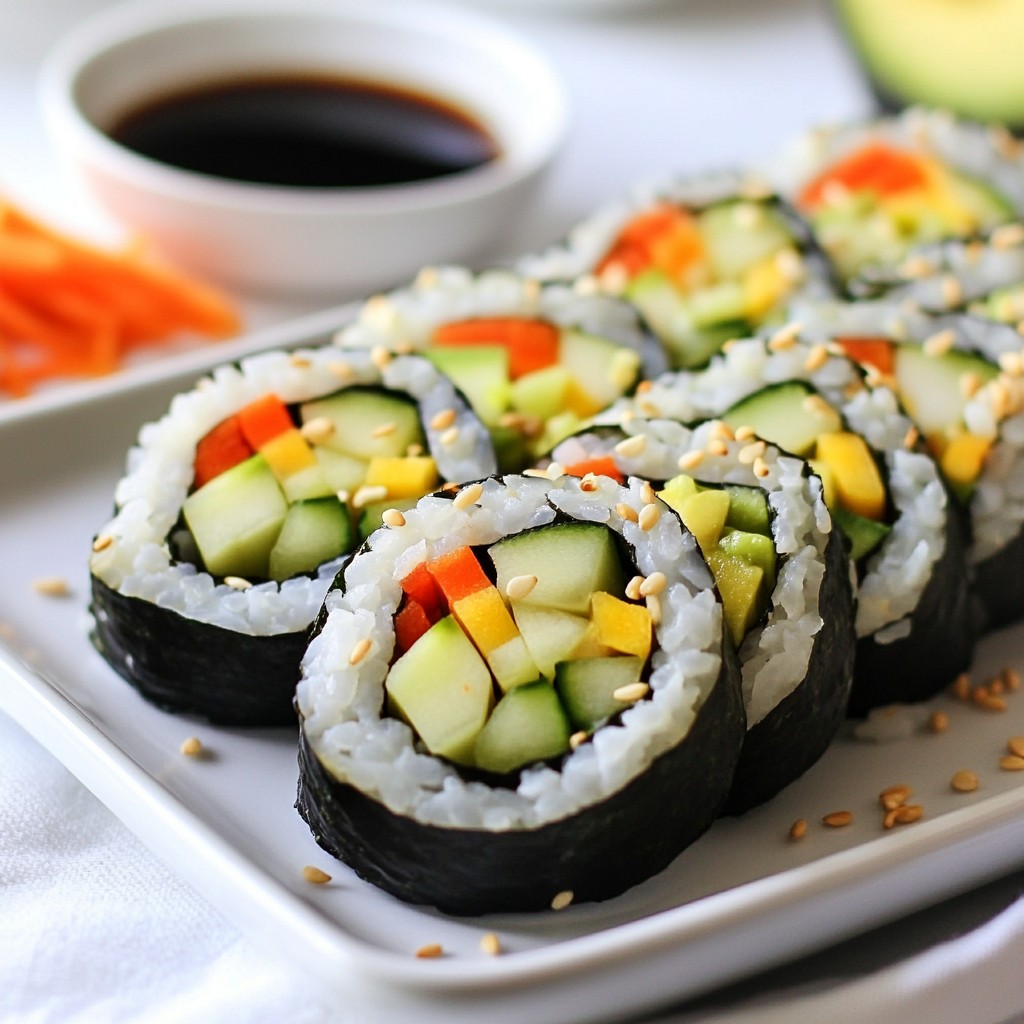
Ready to roll? In this post, I'll show you how to make simple Avocado Veggie Sushi Rolls that are both fresh and tasty. With just a few ingredients like sushi rice, nori sheets, and vibrant vegetables, you can create a healthy meal that looks as good as it tastes. Whether you're a sushi newbie or an expert, this recipe is easy to follow and perfect for any meal or snack. Let’s dive in!
Why I Love This Recipe
- Fresh Ingredients: This sushi roll is packed with fresh vegetables, making it a healthy and vibrant meal option.
- Customizable: You can easily swap out the veggies or add your favorite ingredients to make it your own.
- Fun to Make: Rolling sushi is a fun activity that can be enjoyed with family and friends.
- Deliciously Satisfying: The combination of creamy avocado and crisp veggies creates a delightful texture and flavor.
Ingredients
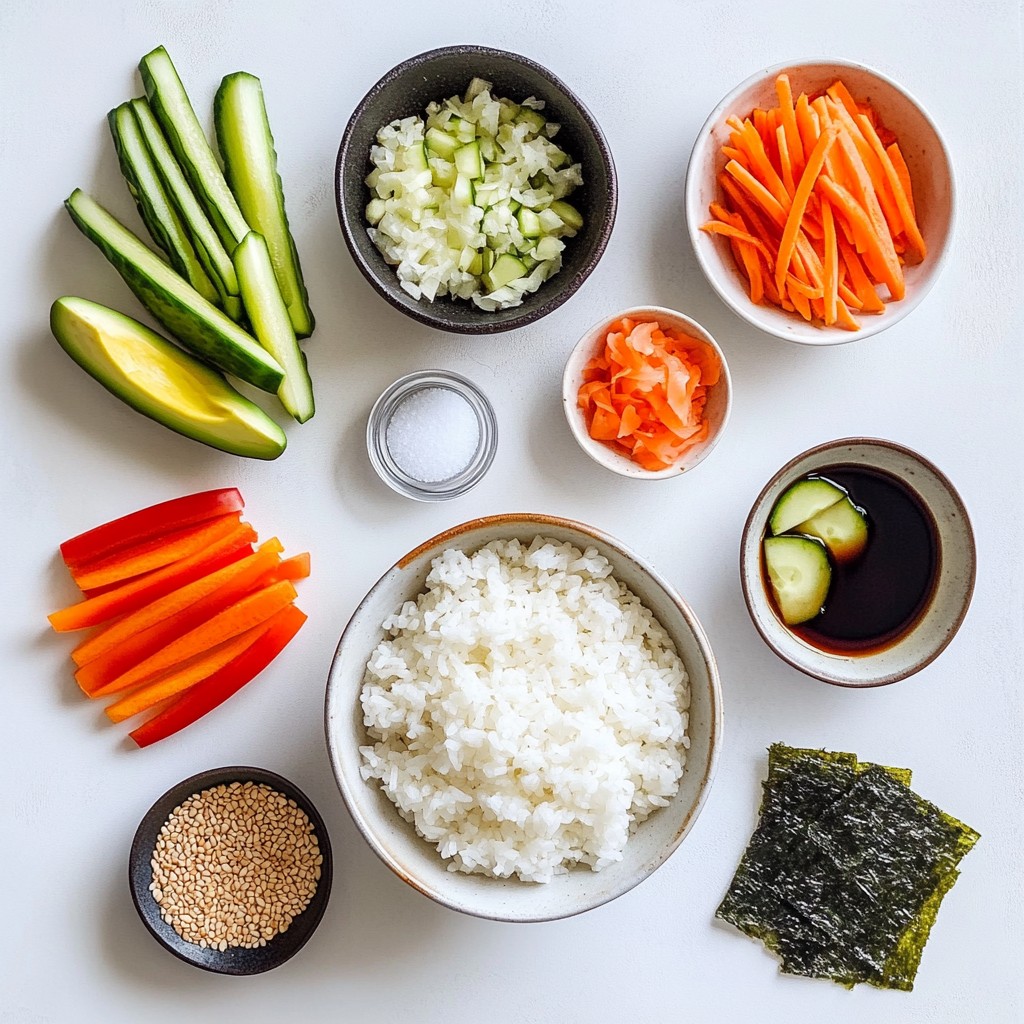
Essential Ingredients for Avocado Veggie Sushi Rolls
- 2 cups sushi rice
- 2 1/2 cups water
- 1/4 cup rice vinegar
- 2 tablespoons sugar
- 1 teaspoon salt
- 4 sheets of nori (seaweed)
- 1 ripe avocado, sliced
- 1 small cucumber, julienned
- 1 small carrot, julienned
- 1/2 red bell pepper, sliced thinly
- 1 tablespoon sesame seeds
Optional Ingredients
- Soy sauce
- Pickled ginger
- Wasabi
Suggested Measurement for Each Ingredient
For this recipe, you will need:
- 2 cups of sushi rice
- 2 1/2 cups of water
- 1/4 cup of rice vinegar
- 2 tablespoons of sugar
- 1 teaspoon of salt
- 4 sheets of nori
- 1 ripe avocado
- 1 small cucumber
- 1 small carrot
- 1/2 red bell pepper
- 1 tablespoon of sesame seeds
When you gather these ingredients, you set the stage for a fun cooking adventure. The sushi rice forms the base, while the nori wraps around your fresh veggies. The avocado adds creaminess, and the colorful vegetables bring crunch and flavor. Using these measurements will help you create rolls that are tasty and satisfying. Enjoy your sushi-making journey!
Step-by-Step Instructions
Preparing the Sushi Rice
1. Rinse the sushi rice under cold water. Keep rinsing until the water runs clear. This step removes excess starch and helps the rice become sticky.
2. Combine the rinsed rice and water in a pot. Bring it to a boil, then lower the heat to a simmer. Cover the pot and cook for 18 minutes. All the water should be absorbed.
3. After cooking, remove the pot from heat. Let it sit covered for another 10 minutes to steam.
4. In a small saucepan, mix rice vinegar, sugar, and salt. Heat on low until dissolved. This mixture adds flavor to the rice.
5. Transfer the cooked rice to a large bowl. While the rice is warm, gently fold in the vinegar mixture. Let the rice cool to room temperature.
Assembling the Sushi Rolls
1. Lay a bamboo sushi mat on a clean surface. Place a sheet of nori on the mat, shiny side down.
2. Wet your hands with water to prevent sticking. Grab a handful of sushi rice and spread it evenly over the nori. Leave about 1 inch at the top edge.
3. In the center of the rice, layer slices of avocado, cucumber, carrot, and red bell pepper. Use a mix of colors for a pretty look.
4. Lift the edge of the bamboo mat closest to you. Start rolling the nori over the filling while applying gentle pressure. Keep the roll tight.
5. Continue rolling until you reach the uncovered edge of the nori. Moisten this edge with a little water to seal the roll.
6. Repeat these steps with the remaining ingredients to make more rolls.
Slicing the Rolls
1. Use a sharp knife to slice each roll into 1-inch pieces. Wipe the knife with a damp cloth between cuts. This keeps the slices clean and neat.
2. For a nice touch, sprinkle sesame seeds on top of the rolls. This adds flavor and a bit of crunch.
3. Arrange the sushi rolls on a platter. Serve with soy sauce, pickled ginger, and wasabi on the side for a complete experience.
Tips & Tricks
Common Mistakes to Avoid
- Overfilling the rolls: It’s easy to want to add all your favorite veggies. But too much filling makes it hard to roll. Stick to a few slices of avocado, cucumber, and other veggies. This keeps your rolls tight and neat.
- Not wetting hands properly: Dry hands make sushi rice stick everywhere. Always wet your hands before handling the rice. This simple step helps you avoid a sticky mess.
Techniques for a Perfect Roll
- Using a bamboo sushi mat: A bamboo mat helps you roll your sushi evenly. Place the nori on the mat, shiny side down. This makes it easy to lift and roll without tearing.
- Sealing the nori: After rolling, moisten the edge of the nori with water. This helps it stick and keeps your sushi roll intact. A good seal makes a big difference in how your rolls hold together.
Enhancing Flavor
- Adding sesame seeds: Sprinkle sesame seeds on top of your rolls for a nice crunch. They add a nutty flavor that pairs well with the fresh veggies. It’s a small touch that makes a big impact.
- Recommendations for dipping sauces: Soy sauce is a classic dip, but try adding pickled ginger or wasabi for a kick. Each adds a unique flavor to your sushi experience. Experiment to find your favorite combination!
Pro Tips
- Fresh Ingredients: Always use the freshest vegetables and ripe avocados for the best flavor and texture in your sushi rolls.
- Rice Consistency: Ensure your sushi rice is sticky enough to hold the rolls together but not too mushy; the perfect balance is key for a great sushi experience.
- Cutting Technique: Use a sharp, wet knife to slice the rolls cleanly. This prevents the rice from sticking to the blade, ensuring nice, even pieces.
- Roll Tight: When rolling the sushi, apply gentle but firm pressure to keep it tight. A loose roll can fall apart when you cut it.
Variations
Alternative Vegetable Combinations
You can mix and match veggies in avocado veggie sushi rolls. Try bell peppers for crunch. They bring a sweet flavor that complements the avocado. Radishes add a nice bite and a pop of color. You can also use zucchini for a fresh taste. Carrots are great, too, adding sweetness and color. Use what you have at home to make it fun.
Unique Sushi Roll Ideas
Want to make your rolls stand out? Add mango slices for a sweet twist. This fruity touch pairs well with creamy avocado. You can also try spicy mayo for a kick. Just mix mayo with sriracha for a quick sauce. Drizzle it on top for a nice look. If you like it spicy, add jalapeños inside. These ideas can change your sushi game!
Gluten-Free Options
If you need gluten-free sushi, don’t worry! Use rice paper instead of nori. Rice paper is easy to find and fun to work with. Just soak it in warm water until soft. Then, layer your ingredients like usual. Roll it up tightly, and it’s ready to eat. This option is great for those with gluten allergies. Enjoy your sushi with peace of mind!
Storage Info
How to Store Leftover Sushi Rolls
Store leftover sushi rolls in an airtight container. This helps keep them fresh. Wrap each roll in plastic wrap before putting them in the container. This extra step prevents them from drying out. Place the container in the fridge. Try to eat the rolls within one day for the best taste.
Best Practices for Reheating Sushi
If you want to reheat sushi, use a microwave. But be careful! Heat it for only 10-15 seconds. This method helps keep the texture nice. Don’t overheat, or the rice will become hard. Another option is to let it sit at room temperature for a short time. This way, you can enjoy the flavors without losing texture.
Shelf Life of Ingredients
The sushi rice lasts up to a week when cooked and stored properly. For fresh veggies like avocado, cucumber, and carrots, aim to use them within three days. They taste best when fresh. If you store them in the fridge, check for any browning or softness. The nori sheets can last for months if kept in a cool, dry place.
FAQs
Can I use brown rice instead of sushi rice?
Yes, you can use brown rice, but it changes the flavor and texture. Brown rice is chewier and has more fiber. You will need to adjust cooking time. Brown rice takes longer to cook, about 40-50 minutes. Use a ratio of 1 cup of brown rice to 2 1/2 cups of water. Rinse it well like you would sushi rice. The vinegar mix will also help, but the rice will not be as sticky.
How do I make the sushi rice sticky?
To make sushi rice sticky, follow these tips:
- Rinse the rice until the water runs clear.
- Cook the rice with the right water ratio, 1 cup rice to 1 1/4 cups water.
- Add the vinegar mix while the rice is warm.
- Gently fold the vinegar mix into the rice.
Let it cool to room temperature. This helps the rice to stick well and hold its shape.
Is it necessary to use a bamboo mat?
No, a bamboo mat is not necessary. You can roll sushi without it. Here are a few methods:
- Use a clean kitchen towel. Place the nori on it and roll.
- Use a flat surface like a cutting board. Just roll by hand.
- You can even use parchment paper for easier rolling.
These methods work just as well, but a bamboo mat makes it easier. It helps create tight rolls.
You’ve learned how to make avocado veggie sushi rolls from scratch. We covered essential ingredients like sushi rice, nori sheets, and fresh veggies. I shared key steps, common mistakes, and tips for perfect sushi. Lastly, you discovered variations and best storage practices. Make these rolls your own with unique flavors and ingredients. With practice, your sushi will impress friends and family. Enjoy crafting delicious, fresh sushi at home.